
When Should My Child First See an Orthodontist?
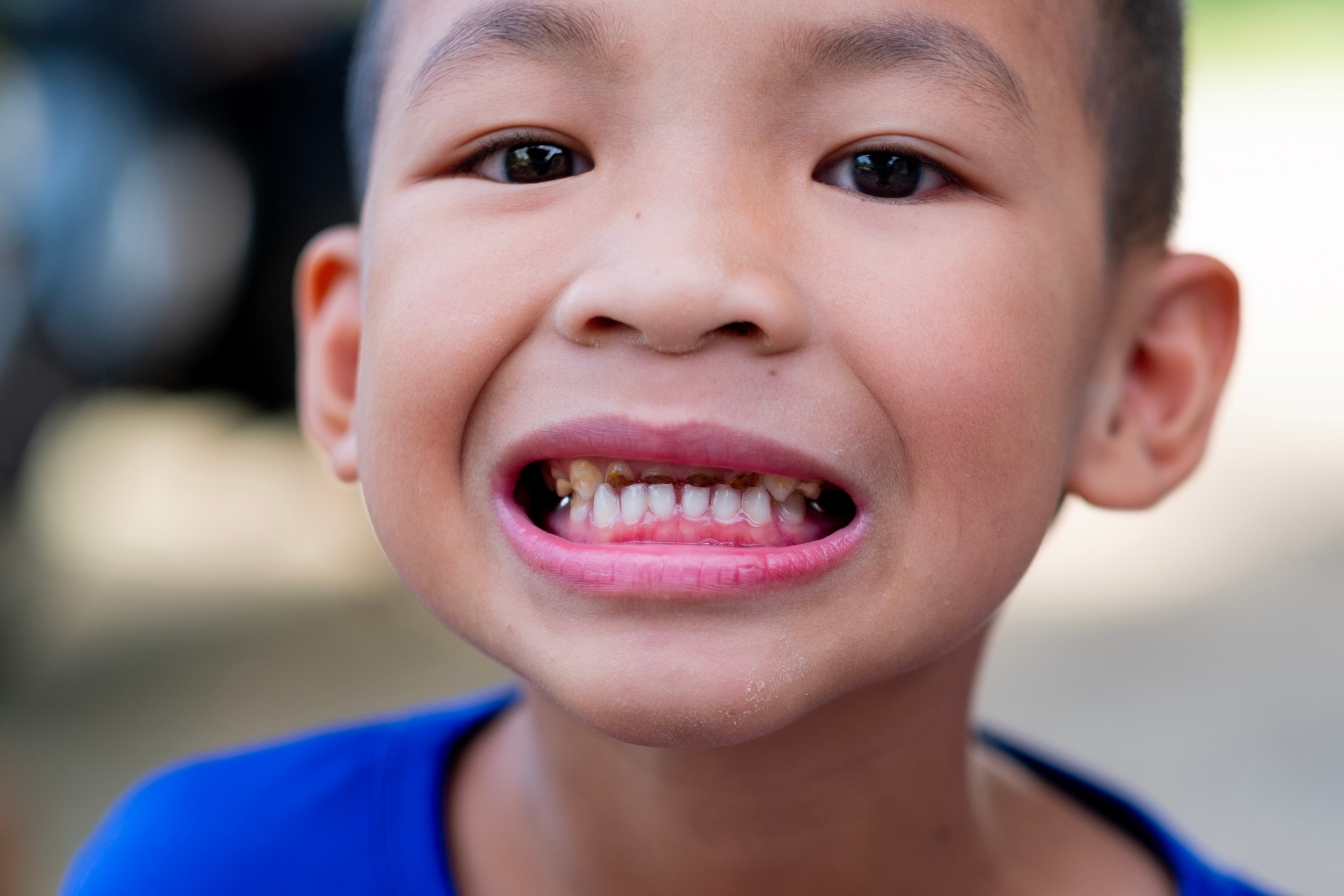
The American Association of Orthodontists recommends that every child have an orthodontic evaluation by age 7. At that age most children still have a mix of baby and permanent teeth, which lets a dentist spot bite and spacing problems while the jaw is still growing and easiest to guide.
An evaluation at 7 does not mean braces at 7. For most children the result is simply a plan to monitor. But for the smaller group who do need early help, acting during a growth spurt can make later treatment shorter, simpler, and sometimes avoidable altogether.
Why Age 7?
Age 7 is the point at which the first permanent molars and incisors have usually come in. That is enough permanent dentition to reveal how the bite is developing, while the jaw is still growing and still responsive to guidance.
Waiting until all the baby teeth are gone, usually around age 12, means waiting until the jaw has largely set. Problems that could have been guided at 8 often have to be corrected at 14, which can mean longer treatment or, in some cases, extractions or surgery that early intervention might have prevented.
What Is Early Orthodontic Intervention?
Early orthodontic intervention, sometimes called interceptive or Phase 1 orthodontics, is treatment that guides jaw growth and incoming permanent teeth rather than straightening a full set of permanent teeth.
It is usually short, often six to twelve months, and it is not a replacement for braces later. The goal is to create the conditions in which the permanent teeth can come in properly, which frequently makes any later treatment easier.
What Signs Should I Watch For?
Book an evaluation sooner rather than later if you notice any of the following:
- Baby teeth lost much earlier or much later than siblings or classmates
- Crowding or permanent teeth coming in visibly out of position
- Front teeth that do not meet when the back teeth are closed together
- Upper front teeth that protrude noticeably, which raises the risk of injury
- Lower teeth that sit in front of the upper teeth when biting down
- Jaw that shifts to one side when closing
- Difficulty chewing, or biting the cheek or roof of the mouth
- Mouth breathing, or snoring during sleep
- Thumb sucking that continues past about age 5
- Speech difficulties that persist
None of these guarantees that treatment is needed. They are reasons to have a look.
Does an Early Evaluation Mean My Child Will Need Braces?
Not usually. For most children evaluated at age 7, the recommendation is to monitor growth at routine checkups and revisit the question in a few years. Roughly speaking, only a minority of children need any active treatment at that age.
When early treatment is recommended, it is because waiting would make the eventual correction harder. Common reasons include a crossbite that will worsen as the jaw grows, severe crowding that leaves no room for permanent teeth, protruding front teeth at high risk of being broken, or a habit such as prolonged thumb sucking that is actively shaping the bite.
What Happens at an Early Orthodontic Evaluation?
The appointment is short and nothing uncomfortable happens. Your child's dentist will examine how the teeth meet, take digital X-rays to see the permanent teeth still under the gum, assess jaw growth and symmetry, and discuss any habits or concerns you have noticed at home.
You will leave with one of three outcomes: no concerns and a recommendation to continue routine care, monitoring with a follow-up in six to twelve months, or a recommendation for early treatment with a clear explanation of why and what it would involve.
What Treatments Are Used in Early Intervention?
Space maintainers
When a baby tooth is lost early, a space maintainer holds the gap open so the permanent tooth has room to come in rather than being crowded out.
Palatal expanders
An expander gently widens a narrow upper jaw over a few months. This is far easier before the jaw's growth plates fuse, which is one of the clearest arguments for evaluating early.
Partial braces
A small number of brackets on specific teeth can correct a particular problem without committing to full braces.
Habit appliances
A simple appliance can help a child stop thumb sucking or tongue thrusting when the habit is affecting how the bite is forming.
Retainers
Retainers hold teeth in their corrected positions after any phase of treatment, and are essential to keeping the result.
Frequently Asked Questions
Is age 7 too young for my child to be evaluated?
No. Age 7 is the age specifically recommended for a first evaluation, because enough permanent teeth are present to assess the bite while the jaw is still growing.
Does the evaluation hurt?
No. It is a visual examination plus digital X-rays. Nothing is done to the teeth.
Will my child still need braces as a teenager?
Often yes, but early treatment frequently makes that second phase shorter and more straightforward.
Can my child get clear aligners instead of braces?
Clear aligners are an option for many teens and adults. Suitability depends on the specific bite, which is part of what an evaluation determines.
Do I need a referral from my regular dentist?
No referral is needed. You can call and schedule an evaluation directly.
Early Orthodontic Evaluations in Thomson, GA
Thomson Family Dental provides children's dentistry and orthodontic care under one roof, so your family does not have to coordinate between separate offices. Dr. Charles Spicer, Dr. Quynh Spicer, and Dr. Mureed Hamdani see patients of all ages from Thomson, Grovetown, Warrenton, Wrens, Appling, and Dearing.
If your child is around 7, or you have noticed any of the signs above, call (706) 595-5152 or request an appointment online. Our office is located at 1350 Washington Rd, Thomson, GA 30824.
Thomson family Dental
Monday: 8am-5pm
Tuesday: 8am-5pm
Wednesday: 8am-1pm
Thursday: 8am-5pm
Friday: 8am-1pm
Sat-Sun: Closed


